





Avikatha – What is it?
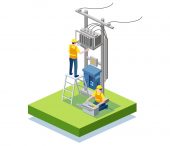
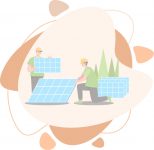
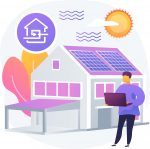
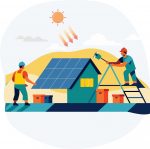
Avikatha is a recently launched scheme by STELCO where applicants can rent their roof to STELCO for solar installation. Power generated from the solar panels installed on rooftops will be fed directly to STELCO grid.
Applicants will receive monthly rent at a fixed rate for STELCO’s usage of their rooftops, based on the number and capacity of panels installed.
From 1st July 2022 onwards, customers residing in islands that STELCO provides service to (Alif Alif Atoll, Alif Dhaal Atoll, Vaavu Atoll and Kaafu Atoll islands customers) can apply to participate in Avikatha scheme. Participation is open to all categories of customers, including domestic, business and government.








ROOF RENTAL RATESMonthly
MVR105/kWp
- Income per 1kWp of solar panels installed.
Is my roof suitable for solar panels?
Most roofs are suitable for solar panels. During our assessment, we evaluate:
- Roof Condition: Ensuring structural integrity.
- Shading: We analyze shading from trees, buildings, and other obstructions.
- Roof Space: Minimum 100sqft of roof space
How long does the rooftop solar installation process take?
The installation of rooftop solar panels usually takes 1-3 days. However, the entire process, including designing, logistics, installation and commissioning, can take up to 4 weeks. We manage all aspects to ensure a smooth experience.
What is net metering?
Net metering is the system that STELCO will use to credit solar energy system owners for the electricity produced by their solar panels. With net metering, you only pay for the electricity that you use beyond what your solar panels can generate.
How long will my solar power system last?
In general, solar panels are very durable and capable of withstanding snow, wind, and hail. The various components of your solar power system will need to be replaced at different, but your system should continue to generate electricity for 20 to 30 years.
What are the environmental benefits of solar energy?
Solar power, like other renewable energy resources, has many environmental and health benefits. Going solar reduces greenhouse gas emissions, which contribute to climate change, and also results in fewer air pollutants like sulfur dioxide and particulate matter, which can cause health problems.
Will I still receive an electric bill if I have solar panels?
You will receive a bill from STELCO. You will be billed for the “net” energy used each month, that is, the difference between the energy fed into the grid by the solar power system and the energy consumed by the house over the monthly billing period.
Do solar panels work in a blackout?
Since the solar is connected to the grid, it will shut off in the event of a blackout. This is to prevent emergency responders and electricity repair people from being injured by your panels sending power back to the grid.
Can solar panels generate electricity on cloudy days?
While solar panels are most efficient in direct sunlight, they can still generate electricity on cloudy days. However, their output may be reduced compared to sunny days.
What happens to excess energy generated by my solar panels?
Excess energy generated by your solar panels is typically fed back into the grid, and you will receive discounts for this surplus energy through net-metering.
How much can I save on my electricity bills with solar panels?
The amount you can save on your electricity bills with solar panels depends on factors such as your energy consumption, the size of your solar system, and local electricity rates. On average, homeowners can save thousands of rufiyaa over the lifetime of their solar panels.